
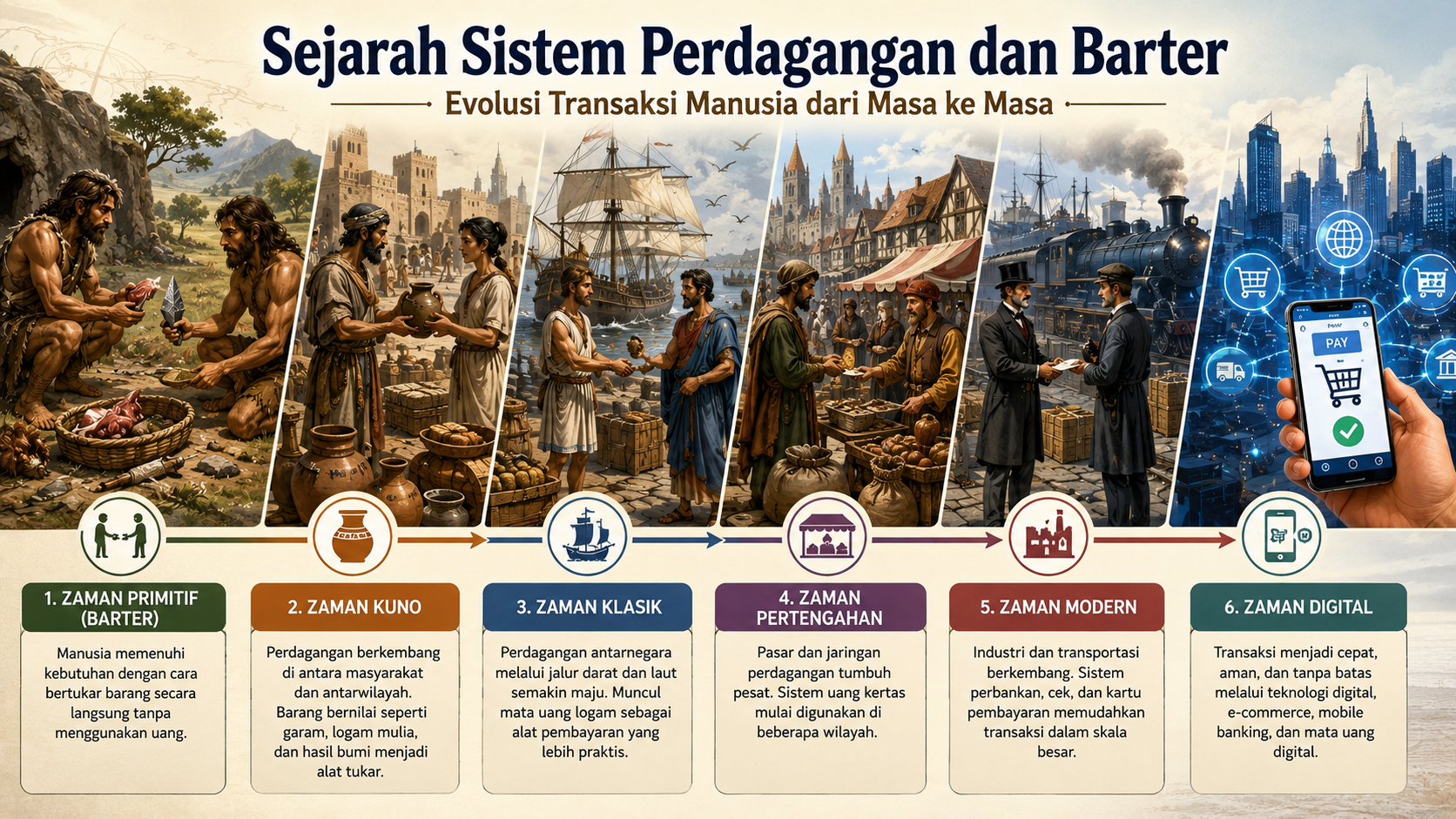
The Historical Origins of Barter in Human Civilization
Items used as currency often have little intrinsic value on their own. Today’s paper money is not inherently valuable as raw material; currency holds value because society collectively agrees to accept it as a standardized payment method.
Before this collective agreement on standardized money evolved, here is how the barter economy developed across history:
Ancient Origins (6000 BC)
Mesopotamian & Phoenician Era
Mesopotamian tribes are widely recognized as the pioneers of the barter system. The Phoenicians later adopted and expanded these trade networks across coastal regions to obtain spices, weapons, and food supplies.
The Roman Empire
Ancient Civilizations
Salt was an exceptionally valuable commodity (salarium). Roman soldiers frequently bartered their military service in exchange for salt, which was crucial for food preservation.
Colonial America
17th & 18th Centuries
Because foreign banks controlled paper currency, early American colonists and Native American tribes relied heavily on barter trade routes to exchange furs, tobacco, corn, and timber.